


Last Updated: November 14, 2026
Quick Summary
A calm, predictable bedtime routine makes bedtime easier for most families. Repeat the same short sequence of steps, such as a bath, pajamas, a tidy-up, and one or two books, at about the same time each night. Keep screens out of the routine and aim for about 20 to 30 minutes.
- Keep the whole bedtime routine to about 20 to 30 minutes.
- Give a 10-minute warning before bath time starts.
- Keep screens out of the bedtime routine, since bright screens keep children alert.
- Let your child choose pajamas or a book to build a sense of control.
- Use the same goodnight words each night to signal that bedtime is over.
Table of Contents
- Why Bedtime Gets Hard and What Usually Helps
- Build a Bedtime Routine for Kids That Repeats Every Night
- A Bedtime Routine for a 5-Year-Old, Step by Step
- Make a Kids' Bedtime Routine Printable Your Family Uses
- Choosing Children's Bedtime Stories That Help Kids Wind Down
- Handling Bedtime Resistance and Stalling Without Losing Your Calm
- Your Next Step: Start Tonight with One Predictable Ritual
- Frequently Asked Questions
Why Bedtime Gets Hard and What Usually Helps
Bedtime often becomes the hardest part of the day for families with young children, but a few changes can make bedtime easier for everyone. Kids who were happy an hour ago suddenly want water, another hug, one more story, or a question about the moon. Parents feel tired and want the evening to end peacefully.
The good news is that most bedtime struggles respond well to a few simple changes. A predictable routine, a calm room, and a story that helps children slow down can make a big difference. A favorite picture book can turn a rushed evening into a cozy one.
Children ages 4 to 8 usually do best when they know what comes next, and a predictable plan can make bedtime easier to manage. When the steps stay the same each night, kids feel safe and settle more easily. The sections below show you how to build that routine, one piece at a time.
Build a Bedtime Routine for Kids That Repeats Every Night
A bedtime routine is simply the same sequence of calm activities, done in the same order, at about the same time. The repetition is the point. Children learn to expect each step, so they stop asking "what now?" and start moving toward sleep.
A routine of about 20 to 30 minutes is a good starting point. Keep it short enough to finish before everyone is exhausted, and long enough to feel unhurried.
A simple routine might include:
- A warm bath or washing face and brushing teeth
- Putting on pajamas
- Tidying up toys together
- Reading one or two books in bed
- A quick talk about the day, then lights out
Try to keep screens out of the routine. Bright screens can keep children alert, so swap them for quieter activities (the WHO).
Here is a quick look at the routine elements the article recommends.
| Element | Suggested time | Note |
|---|---|---|
| Whole routine | 20 to 30 minutes | Short enough to finish before exhaustion |
| Warning before bath | 10 minutes | Makes the transition gentler |
| Tidying up toys | Part of the routine | Done together each night |
| Screens | Keep out of routine | Bright screens keep children alert |
A Bedtime Routine for a 5-Year-Old, Step by Step
Five-year-olds are curious and full of energy, so they benefit from clear steps they can follow with a little independence. Here is an example evening you can adapt for your child:
- Give a 10-minute warning. Say, "Bath time starts soon." This helps the transition feel gentler.
- Bath and pajamas. Let your child choose a pair of pajamas from two options. Small choices give a sense of control.
- Brush teeth together. Taking turns makes the task feel like a game.
- Tidy up for 5 minutes. Ask your child to put three things back in their homes.
- Pick a book. Let your child choose one favorite story for the night.
- Read together in bed. Use a calm voice and keep the lights low.
- Say goodnight. End with the same words each night, such as "Sweet dreams, see you in the morning."
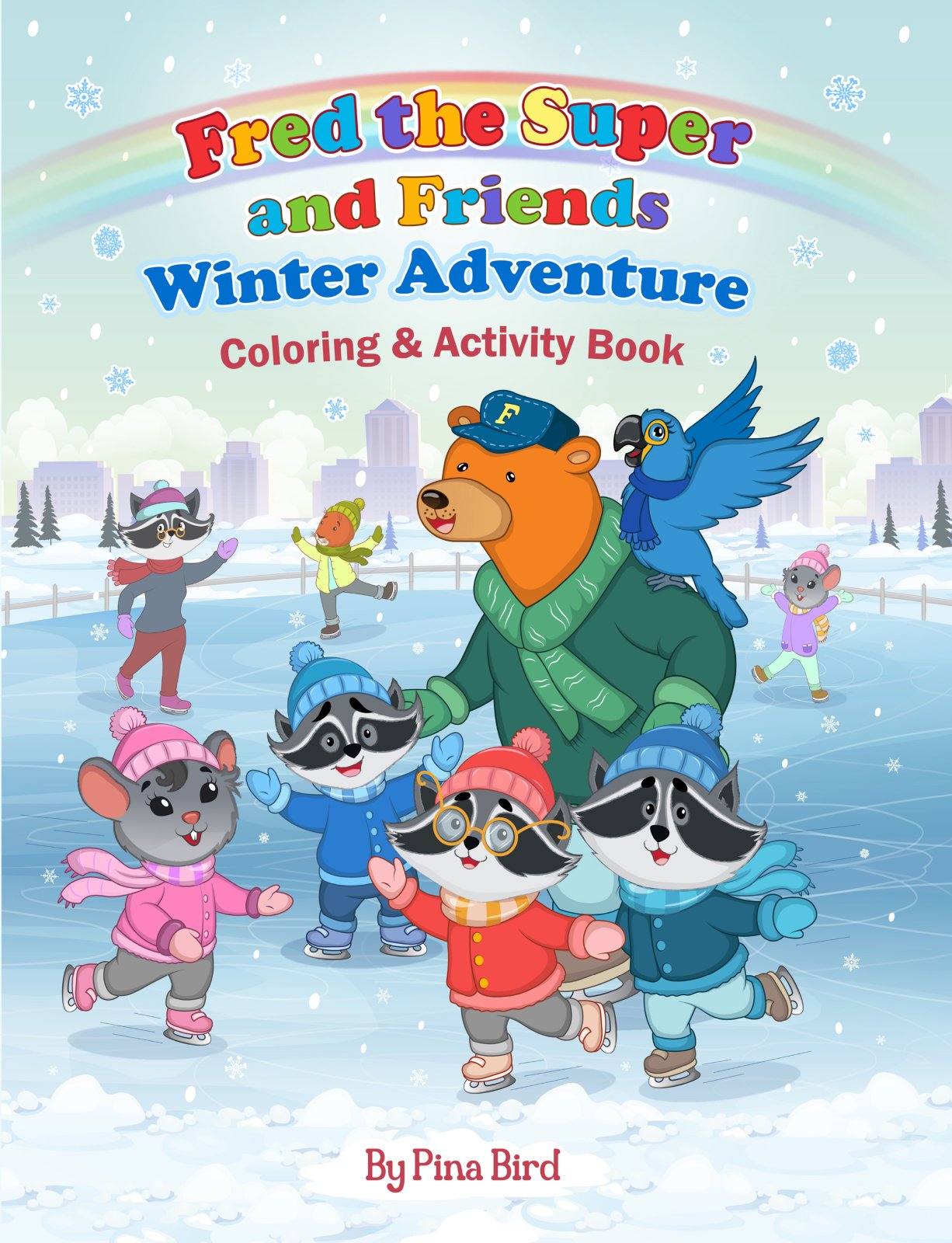
Some children enjoy coloring or activity pages before bed. The Fred the Super and Friends Winter Adventure Coloring & Activity Book includes games and a pack of crayons to fill a quiet wind-down time. A quiet activity can help a child wind down, especially on nights when the book does not quite settle them. You can find free printable coloring pages for kids that work well as a calm bedtime activity.
Make a Kids' Bedtime Routine Printable Your Family Uses
A printable routine chart can help children see each step. Make one with pictures for each task: pajamas, teeth, toys, book, and bed. Hang it at your child's eye level and let them check off each step.
Visual charts work especially well for young children who are still learning to read. Your child can move a clip or place a sticker after each step. Over time, the chart becomes a small source of pride.
The Pina Bird Books Kids Club offers free downloadable coloring pages and activity pages that can add a calm activity to your evening. Visitors enter their first name and email before downloading.
Choosing Children's Bedtime Stories That Help Kids Wind Down
The right story can change the mood of the whole room. Look for picture books with a gentle pace, warm characters, and a satisfying ending. Stories that move too fast or end on a cliffhanger can keep children wide awake.

Good bedtime choices often share a few qualities:
- Soft, friendly characters who face small challenges
- Simple, rhythmic language that is easy to follow
- Happy endings that leave children feeling safe
- Illustrations that invite quiet looking and talking
Many families return to the same book night after night. That repetition helps children feel secure and builds early reading skills.
You can browse our signed children's books by Pina Bird for picture books about kindness, family, and friendship for ages 4 to 8. Some of our most popular books for little kids are chosen for their sweet characters and calm, read-aloud rhythm.
Handling Bedtime Resistance and Stalling Without Losing Your Calm
Almost every family faces stalling. A child asks for water, then a snack, then a second blanket, then one more question about dinosaurs. The requests are rarely about thirst or blankets. They are usually about connection and about delaying the separation that sleep represents. Understanding that changes how you respond.
Staying calm is the most useful response, but calm is not something you can simply decide to feel at 8:45 p.m. after a long day. Bedtime resistance can escalate when the adult is already worn out, so one practical step is taking a moment to regulate yourself first.
Try these steps when stalling begins:
- Lower your voice instead of raising it. A quieter voice forces your child to stop and listen, and it keeps your own nervous system steadier.
- Answer the request once, briefly and kindly. "Yes, one sip of water, then back to bed." Repeating it a second time in the same tone signals that the answer is settled.
- Name the next step clearly. "After this page, it is lights out." Vague endings invite negotiation; specific ones do not.
- Offer a choice inside the routine, not about the routine. Which story, which pajamas, which stuffed animal. Choices give a sense of control without reopening the bedtime decision itself.
- Use a consistent closing phrase. The same goodnight words each night become a cue that the conversation is over.
- Praise the moments your child follows the routine. "You went straight to brush your teeth tonight. That helped." Specific praise is more effective than general praise.
Avoid long debates at bedtime. A short, firm, friendly response works better than a lengthy talk, and a lengthy talk gives a tired child more time to stay awake.
When You Feel Yourself Losing Patience
Bedtime is one of the most common trigger points for parental burnout, and that is worth saying plainly. If you notice your jaw tightening or your voice rising, a brief reset helps more than pushing through. Step to the doorway for ten seconds, take one slow breath, and return. If another adult is home, trade off nights so the same person is not always the one managing the hardest hour. If you are parenting solo, a simple mantra repeated silently, such as "this is a phase, not a failure," can interrupt the spiral.
If you find yourself negotiating every night or raising your voice most evenings, the routine may be too long or too vague. Shortening it and making each step explicit can help reduce conflict.
A Simple Script for the Third Glass of Water
Children test the boundary to see whether it holds. A steady, boring, repeatable answer is the goal. Try: "You had water. It is time for sleep. I love you. See you in the morning." Then leave the room or return to your spot. The first few nights may be harder before they get easier, which is normal. Consistency over several nights is what teaches the routine to hold.
Your Next Step: Start Tonight with One Predictable Ritual
You do not need a perfect routine to start. Pick one predictable ritual for tonight, such as reading the same book at the same time each evening. Add more steps once that feels natural.
Begin by choosing a story your child already loves, then sharing it with a calm voice and a cozy blanket. At Pina Bird Books, we create picture books that bring lovable characters and gentle adventures into bedtime. Explore our collection to find a story that makes your evenings a little easier.
Frequently Asked Questions
What is the 7-7-7 rule for kids?
The 7-7-7 rule is a simple way to think about a child's day in blocks, often described as about seven hours of sleep, a set wake-up time, and a consistent schedule. In practice, it helps parents work backward from a fixed morning wake time to choose a bedtime that gives a child enough rest. Pairing a regular schedule with the same calming steps each night makes it easier for children to recognize that sleep is coming, which is the core of an easier bedtime.
What is the 3-2-1 rule for bedtime?
The 3-2-1 rule is a guideline some families use to structure the hours before sleep: no large meals about three hours before bed, no screens about two hours before bed, and no work or stressful tasks about one hour before bed. The exact timing matters less than the pattern. Use the last hour for quiet activities like a bath, pajamas, teeth brushing and a favorite picture book, so the transition from play to sleep feels gentle.
How long should a bedtime routine for kids take?
Most bedtime routines for young children work well when they take about 20 to 30 minutes from start to lights out. That is long enough to include bath or washing up, pajamas, a few pages of a book and a goodnight ritual, but short enough to avoid overtiredness. The routine should feel the same each night, since predictability is what helps children relax and settle more quickly.
What should a bedtime routine for a 5-year-old include?
A bedtime routine for a 5-year-old usually includes a few clear, familiar steps in the same order: washing up, putting on pajamas, brushing teeth, choosing one or two books, and a goodnight hug or special phrase. Five-year-olds often respond well to picture cues and small choices, such as picking which book to read. Keep the steps short and consistent, and give a simple heads-up before the routine begins so the transition feels less abrupt.
